Sustainability at UMass Amherst


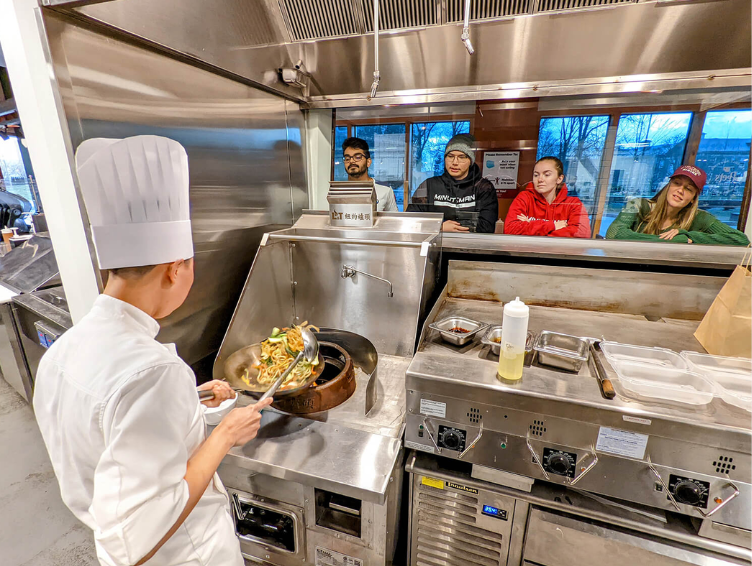
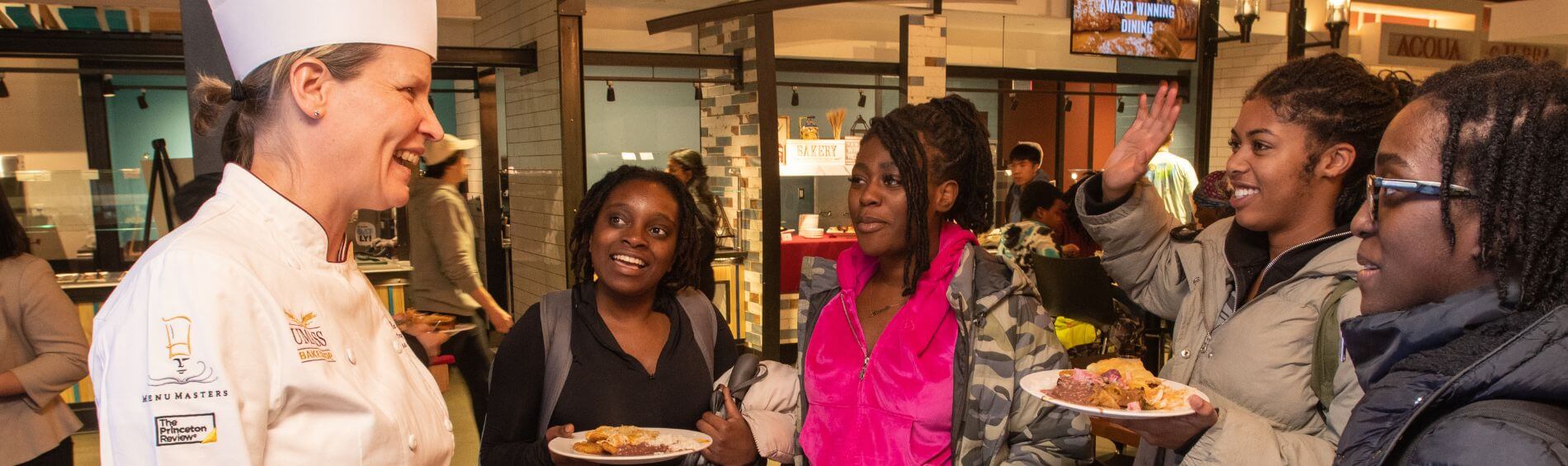
UMass Dining is committed to addressing many of the global issues surrounding our food supply. We continually strive to become a more socially and environmentally responsible program that supports the campus local communities. UMass Dining staff work alongside the UMass Campus Sustainability Initiative, and many other departments to demonstrate the vision of what a sustainable community and world can look like.
 
UMass Dining Sustainability Highlights:


UMass Permaculture Initiative:

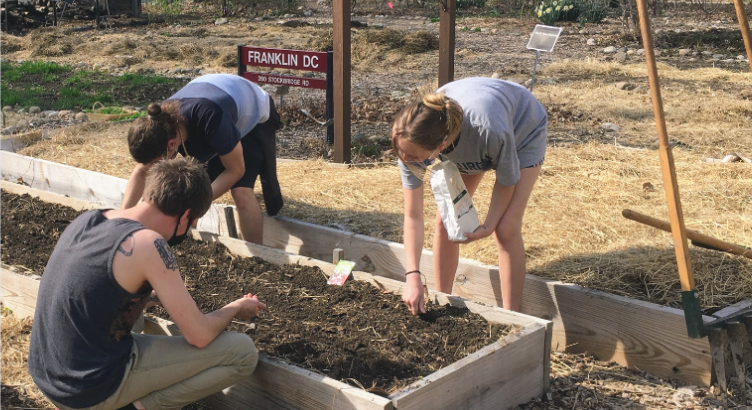
The UMass Permaculture Initiative is an extension of the University of Massachusetts Amherst Dining Services and Stockbridge School of Agriculture. Founded in 2010, this initiative is a unique and cutting-edge sustainability program that transforms underutilized sites on the UMass campus and surrounding community into edible and educational “living laboratories” as part of a larger institutional transition into an ecological campus culture. These permaculture landscapes demonstrate community resiliency, promote bioregional food security, and strengthen community partnerships. In March 2012, The UMass Permaculture Initiative was recognized by President Obama as winners of the Campus Champions of Change Challenge, hosted by the White House. 

The UMass Permaculture Initiative benefits the community by:

  • Offering hands-on education about sustainability and specifically how to convert unproductive grass lawns into edible, low-maintenance, and aesthetically-pleasing permaculture gardens
  • Engaging local K-12 schools and non-profits such as Big Brothers Big Sisters Organization in the garden planting process
  • Supporting local business through purchasing of plant material, local food, energy conserving appliances, and items for educations workshops and events
  • Creating beautiful spaces where students can gather and rest, professors can teach, and visitors can learn through garden tours
  • Providing fresh, local and organic food for all to enjoy!


Composting Program:

Our composting program is particularly effective because we have committed to 1) creating infrastructure changes which fully support waste diversion and 2) educating and empowering students to compost on the UMass campus. A partnership between the UMass Physical Plant and the New England Small Farmers Institute (NESFI) allows us to convert food waste into rich compost just 9 miles away in Belchertown, MA. As a result, organic waste is now the largest stream of recycling on campus with over 1,000 tons per year. 

Notable features of our Compost Program:

  • UMass Dining composts all pre- and post-consumer food waste in the Dining Commons, and in our retail dining locations alone 40 tons of mixed trash have been diverted to compost in the past year.
  • In our retail dining locations, nearly all of our disposable products are biodegradable or recyclable
  • We are working to install compost bins in all of our retail dining locations
  • Starting January 2013, we rebranded our compost signage to be more accessible and educational
  • Student volunteers educate and engage the campus community around composting
  • We host fun and engaging events to promote awareness around waste reduction and composting 


Purchasing Program:

UMass Dining serves over 16,000 students in the Dining Commons each year. As a result, we recognize that we have a unique responsibility to source foods and products which are socially and ecologically responsible. There are three major drivers for our decision to purchase locally and responsibly: 1) We value environmental stewardship and making a positive impact in the local community; 2) we have observed a demand from our students to purchase locally, so we have taken an interet in giving the students what they have asked for, thereby increasing student satisfcation; and 3) by using creative purchasing strategies, we found that buying local is sometimes competitively priced with food that we might otherwise buy from larger companies.

Some of our purchasing highlights include..

  • A stipulation in our request for proposals (RFP) for produce distributors that vendors follow Food Alliance certifcation standards
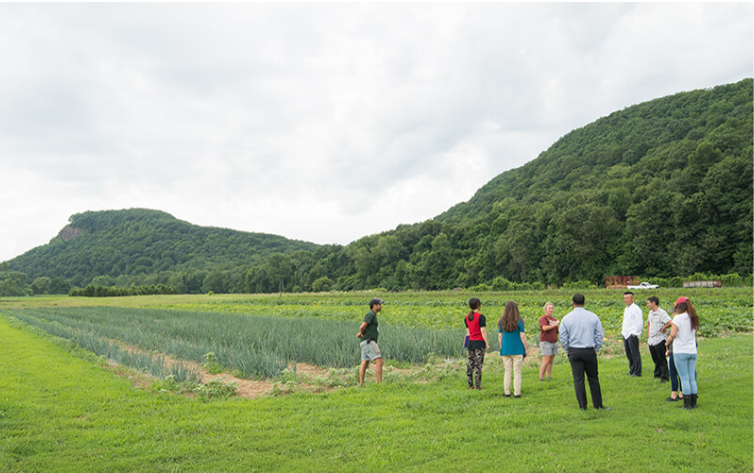
  • One local vendor (Joe Czajkowski Farm, just 2 miles from campus) brokers for additional local farms in order to allow UMass Dining to source as much local produce as possible
  • Nearly all seafood served through UMass Dining is Seafood WATCH certified
  • Shade-grown, organic, Fair Trade coffee
  • 100% cage-free, local, heirloom eggs
  • 16 students are currently receiving academic credit to perform a purchasing audit of UMass Dining in accordance with the standards of the Real Food Challenge Campus Committment
  • We source produce from the UMass Student Farming Enterprise and our on-campus Permaculture Gardens
  • Source a significant portion of UMass Dining's lettuce from our on-campus hydroponics greenhouses


Student Farmers' Market:

UMass Dining coordinates this weekly farmers' market each fall right on campus, allowing all students to buy local, organic produce, all grown by UMass students. Vendors at this market include the UMass Student Farming Enterprise (veggies and CSA shares), the UMass Permaculture Initiaitve (veggeis and herbs), and the Gardenshare student organization (veggies and herbs). 


Real Food Challenge Campus Committment:

UMass Dining is now partnering with the Real Food national organization to research and incorporate "real food" into our purchasing plan. "Real food" is defined as being supportive of local economies, ecologically sound, fair, and humane. The main goals of this program are to work towards sourcing at least 20% "real food" by 2020 and to create supportive networks between students, staff, and faculty which promote education, leadership building, and activism around just and sustainable food systems.

Our first step towards reaching the goals of the Real Food Challege Campus Committement is to run the "Real Food Calculator," a tool created for campuses to evaluate their current purchases and research ways to shift purchasing to more "real food."

This semester, UMass Dining and Stockbridge School of Agriculture are sponsoring 16 students to receive academic credit to run the Real Food Calculatod, research food distributors, analyze data, and provide recommendations for strategies to source more "real food."


Waste Reduction Strategies:

We understand that there are always ways to improve our efficiency and reduce waste. Some of the highlights of our waste reduction program include:

  • Trayless dining: Implemented in all 4 Dining Commons and Retail Dining locations in 2009, reducing average food waste by 30% per person
  • Reusable bottles: Distribute reusable, aluminum water bottles to students on the meal plan each year and installed purified water filters
  • Bottle-less dining: Eliminated bottled beverages from all Grab 'n' Go locations and encourage reusable options
  • Reusable bags: UMass Dining eliminated plastic bags from all Grab 'n' Go locations and each year distribute reusable bags for students on the meal plan